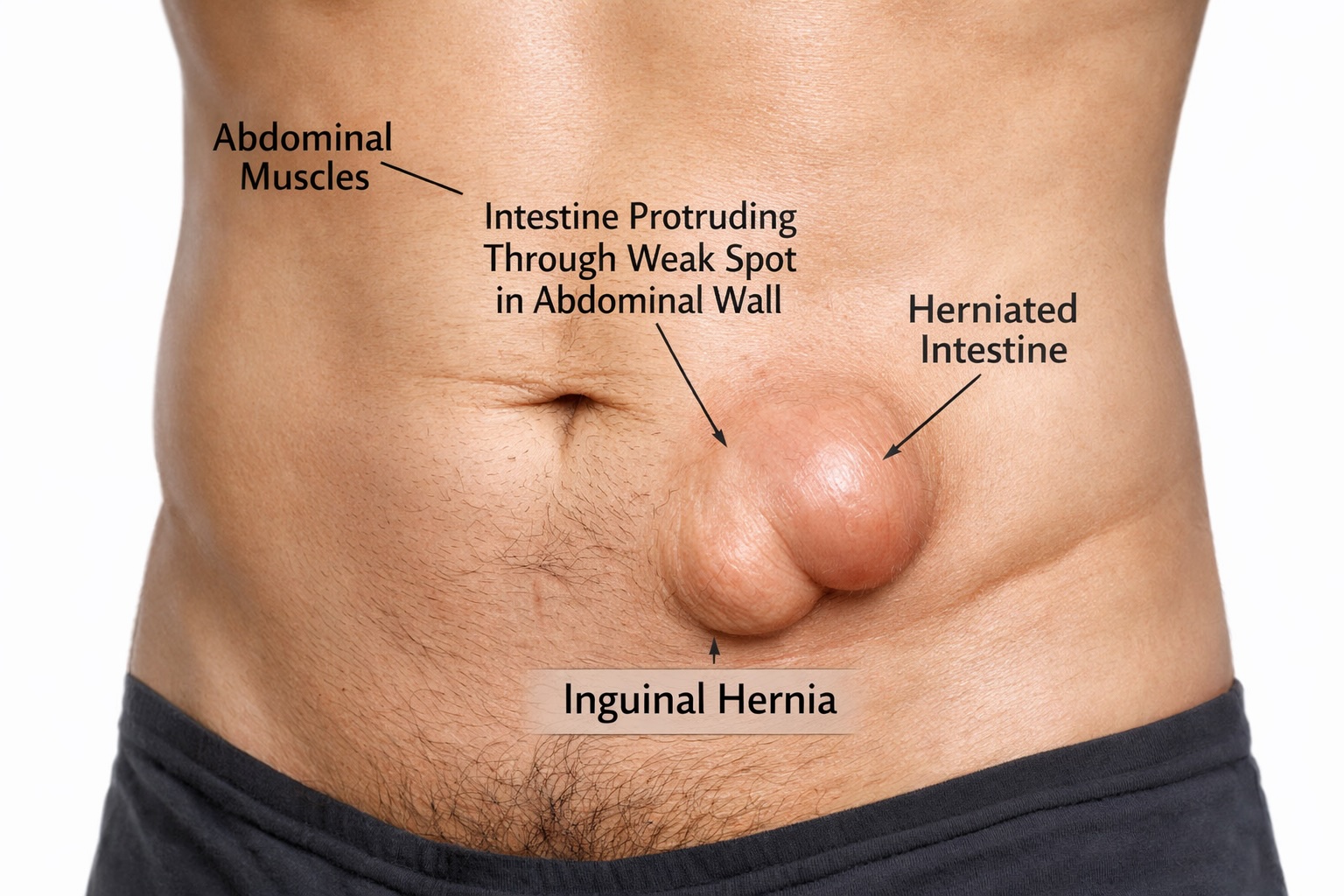
Hernia Surgery: Your Questions Answered
Expert advice from Mr. Arshad Malik, Consultant Colorectal & General Surgeon
What is a hernia?
A hernia occurs when an internal part of the body (such as a piece of bowel or fatty tissue) pushes through a weakness in the surrounding muscle or connective tissue wall. It often appears as a noticeable lump, especially when coughing or straining, and may cause discomfort or pain.
What are the most common types of hernia?
- Inguinal Hernia: The most common type, appearing in the groin. It is more frequent in men.
- Umbilical Hernia: Occurs near the belly button, common in infants but also adults.
- Incisional or Ventral Hernia: Develops at the site of a previous surgical scar on the abdomen.
- Femoral Hernia: A less common type in the upper thigh/groin, more frequent in women.
What causes a hernia?
Hernias are caused by a combination of muscle weakness and increased pressure. Common factors include:
- Heavy lifting
- Chronic coughing or sneezing
- Constipation and straining
- Obesity
- Pregnancy
- Previous abdominal surgery
What are the symptoms of a hernia?
- A visible bulge or lump, especially when standing or straining
- Aching, discomfort, or a heavy sensation at the site
- Pain when lifting, coughing, or bending
- In severe cases: nausea, vomiting, and severe pain (signs of a strangulated hernia—seek immediate medical attention)
When is hernia surgery necessary?
Not all hernias require immediate surgery. We typically recommend repair if:
- The hernia is painful or enlarging.
- It interferes with daily activities.
- There is a risk of strangulation (where the blood supply to the trapped tissue is cut off), which is a surgical emergency.
What are my hernia repair options?
I offer a full range of modern techniques, tailored to your specific hernia and overall health:
- Open Hernia Repair: A traditional approach involving a single incision over the hernia. Strong, synthetic mesh is often used to reinforce the weakened area.
- Laparoscopic (Keyhole) Hernia Repair: Several small incisions are made. Using a tiny camera and instruments, I repair the hernia from behind the abdominal wall with mesh. Benefits often include less post-operative pain and a faster return to normal activities.
- Robotic-Assisted Hernia Repair: The most advanced form of keyhole surgery, using the da Vinci surgical system. This provides me with enhanced 3D vision, precision, and dexterity, which can be particularly beneficial for complex or recurrent hernias.
What is recovery like after hernia surgery?
- Most laparoscopic/robotic repairs are performed as day-case procedures.
- You can walk the same day, but should avoid heavy lifting (more than a full kettle) for 2-6 weeks.
- Discomfort is managed with simple pain relief.
- Most people return to desk work within 1-2 weeks and to full normal activities, including gym, within 4-6 weeks.
Will the hernia come back?
Modern mesh repair techniques have significantly reduced recurrence rates to a very low percentage. Following post-operative advice, especially regarding lifting, is key to a successful long-term outcome.